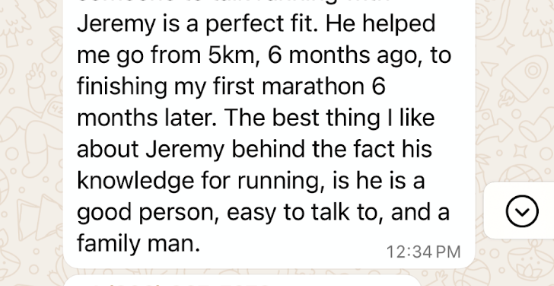
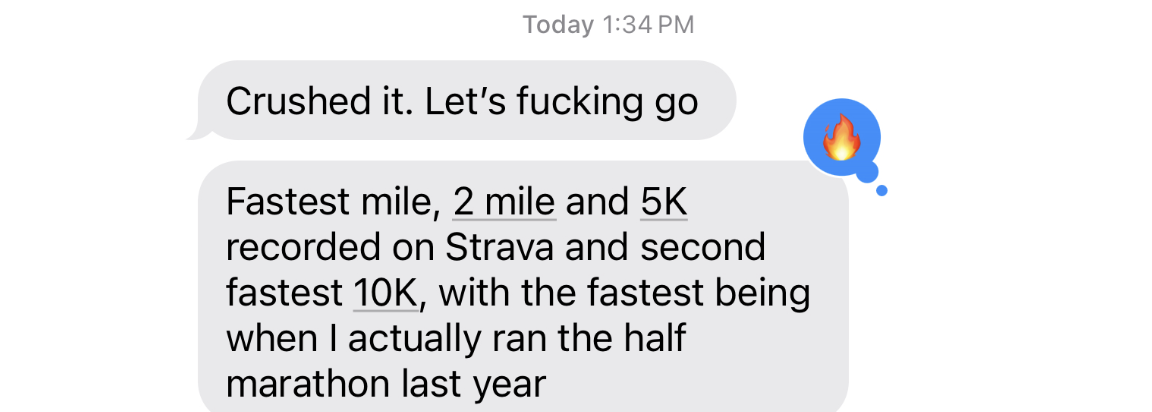
Coaching for dads who want their strength, fitness, and athleticism back, with a real human in your corner so you actually get there.
Book a Free Discovery CallFree 15-minute call. No pitch. I'll tell you if I can help, and if I can't, I'll point you to someone who can.
You used to be the guy who could just go. Lace up, run, lift, play, recover by morning.
Now? You start training, things feel good for a few weeks, then something tightens. A calf. An achilles. A knee. You back off, lose the momentum, and the cycle resets.
Or you do the opposite. You guess your way through plans built for 22-year-olds with no kids and no inbox, and your body sends you the bill three weeks later.
Either way, you've started and stopped enough times that you're starting to wonder if running is just something you used to do.
It isn't. The problem isn't your body. It isn't your motivation. It's that you're trying to do this alone, with watch data, YouTube videos, and a plan that doesn't know your life.
It doesn't if you won't.
I'm picky about who I work with because I can only do half the job. I'll build the plan, watch the data, adjust the load, and hold you accountable. You have to actually run.
This is for you if
This is not for you if
If you're the first list, keep reading. If you're the second, no hard feelings—you'll save us both the call.
There's a lot of AI coaching out there right now. Apps that build your plan, adjust your paces, send you a check-in nudge. Some of it's pretty good. I use AI tools in my own coaching.
But here's what AI keeps getting wrong: it misses the balance.
On one side, it's too agreeable. You miss a day, it tells you that's okay, recovery matters, let's pick it up tomorrow. You miss a week, it adjusts the plan down. You ghost it for a month, it welcomes you back warmly. That's not coaching. That's a yes-man with a training algorithm.
On the other side, it pushes too hard. If you keep checking the boxes, the algorithm keeps ramping. More volume, more intensity, less recovery. You feel strong for a few weeks until something gives, and now you're hurt. The AI didn't know you had bad sleep, a stressful week, and a calf that was already whispering at you on Tuesday. It just saw "workout completed" and pressed go.
Real coaching lives in the middle. Sometimes it's back off when you want to push. Sometimes it's push when you want to back off. The plan on paper is only half the job. The other half is reading you, your body, your week, your life, and knowing which way to adjust.
I am your
Guide
when you don't know the next step.
Support
when life gets in the way and the plan has to bend.
Cheerleader
when you forget how far you've come and need someone to remind you what you've already pulled off.
Drill sergeant
when you don't need a pat on the back, you need someone to tell you to lace up and go (with the right amount of love).
Accountability partner
who's checking in, asking questions, and helping you get back on the plan tomorrow when today went sideways. The focus is forward.
This is the one thing software can't do. And it's the thing that separates the guys who finish from the guys who restart.
You don't need more options. You need fewer decisions. Here's the split:
Your job
My job
The plan adapts to your real life. Travel weeks, sick kids, bad sleep, work crunch. You don't have to figure out what to skip or what to swap. You tell me what's going on, I move the pieces.
You train 3 to 4 days a week with running, plus short, surgical strength and mobility work that targets the specific things that have been breaking you. No wasted workouts. No 90-minute strength sessions on top of your runs. Everything earns its place.
Most training is built on numbers alone. Pace, heart rate, distance, splits. That data is useful, but it misses something every experienced runner knows: how a run felt matters as much as how it looked on the watch.
Two runs at the same pace can mean two completely different things. One felt smooth. The other felt like dragging a sled. The watch doesn't know the difference. You do.
My coaching pairs your objective data (pace, distance, heart rate from your watch) with your subjective data (how it felt, what you noticed, what hurt or didn't). That's where the real signal lives, and that's where smart adjustments come from.
This is where data, feel, and a human coach come together. The watch sees the numbers. You feel what's underneath them. We make the call.
Here's what's included when we work together:
You pay: $500/mo
Or pay 6 months upfront ($2,500) and get one month free.
The 6-month progression
We rebuild consistency, fix the weak links that have been breaking you, and get you training without flare-ups. This is the part most plans skip, and it's why most plans fail.
You get more efficient AND faster. We layer in workouts you can actually handle without destroying your week. Strength and mobility keep compounding in the background.
You train with purpose. We dial in fueling, pacing, and taper. You show up to race day knowing exactly what to do, because we've practiced it.
This is a month-to-month engagement. No contracts, no lock-in. I recommend six months because that's how long it takes to build a real foundation. Most of my guys stay longer—not because they have to, but because having a coach in your corner beats going back to figuring it out alone.
This is what changes when you stop guessing and start training with a coach who actually knows you.
Before
After

Before
After

Before
After

Before
After

Before
After

Before
After

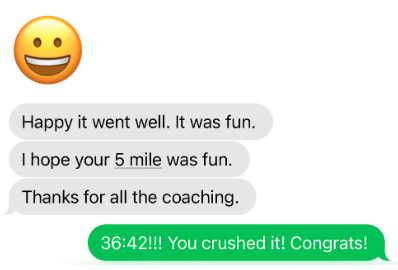
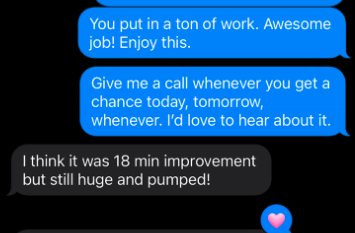
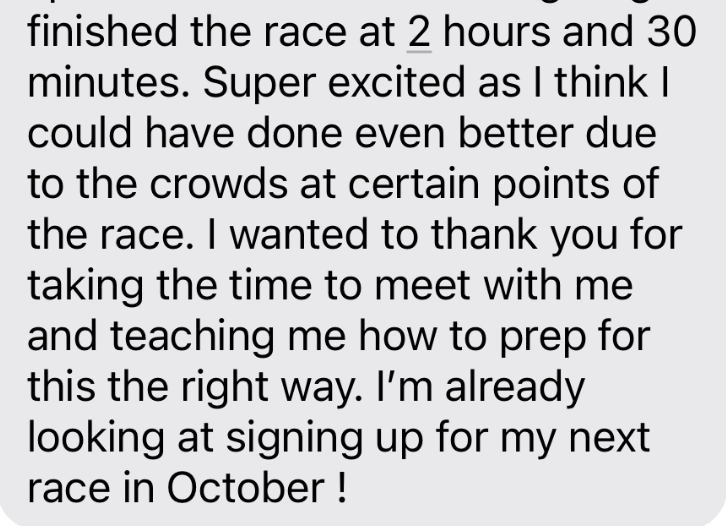
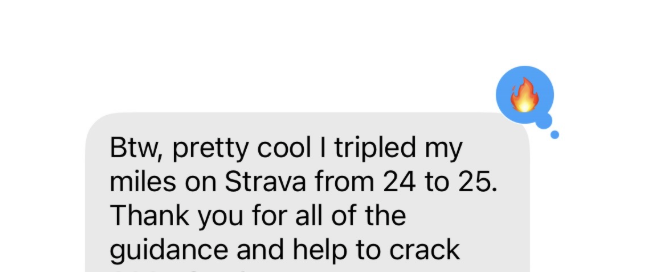
Different guys. Different starting points. Same pattern: stop spinning your wheels alone, plug into a system with a coach who knows you, and the results compound.
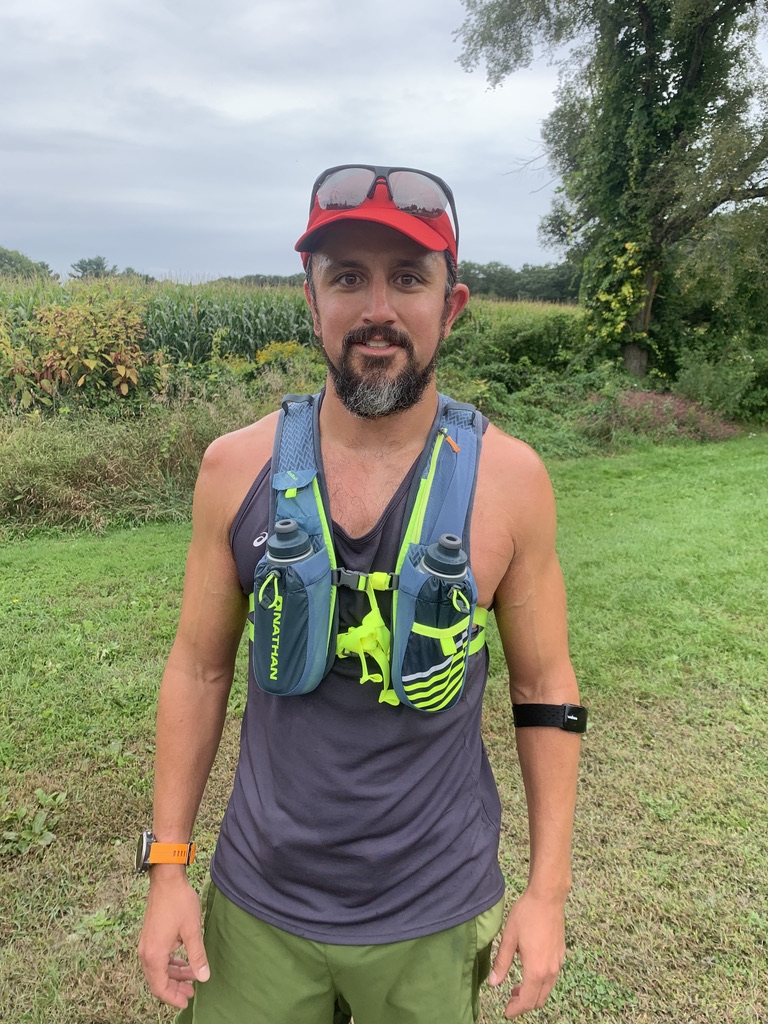
I'm Jeremy Singh. I'm a running coach, a dad, and a guy who's logged over 11,000 miles figuring out what actually works for runners with real lives.
I've coached hundreds of training weeks across all kinds of runners: first-time 5k finishers, marathoners, ultra hopefuls, and guys just trying to run pain-free again. My coaching is built on a few non-negotiables: consistency over intensity, RPE and feel over blind metrics, strength and mobility as a foundation (not an afterthought), and human accountability that actually shows up when you need it.
I'm training for a 25-hour backyard ultra and qualifying for Boston. I plan to run a marathon at 100. I'm in this for life, and I take it seriously. I'll take your training that seriously too.
If after 30 days you don't feel clearer, more confident, and back in control of your training, I'll refund you—and buy you a pair of running shoes (up to $200) for your trouble.
I can offer this because the guys who actually do the work get results. Every time.
Most of my clients stay over a year.
Not because they have to. Because once they have a real partner in their training, they don't want to go back.
That's most of who I work with. We start by figuring out the patterns behind your injuries (often it's not what you think), then we build training that keeps you ahead of them instead of always reacting.
Yes. Plenty of guys come to me wanting to feel athletic again, run consistently, and rebuild a base. A race can come later, or never. The system works either way.
3-4 runs (most around 30-60 minutes), plus 2 short strength/mobility sessions (15-25 minutes each). Built for guys with full lives, not retirees.
Tell me, I adjust. The plan flexes around your life. That's the whole point.
An app can build a plan. It can't tell you to take the rest day when you're lying to yourself about being fine. It can't talk you off the ledge at mile 22. It can't hear the difference between "I'm tired" and "I'm breaking." That read—that's the whole offer.
The discovery call is free, and I'll tell you straight if I think I can help you. I'd rather not take your money than take it and waste your time.
Book a free 15-minute discovery call. We'll talk about where you are, where you want to go, and whether I'm the right guy to help you get there.
If I'm not, I'll tell you. If I am, we'll talk about next steps.
Book Your Free Discovery Call